How to Open a Second Restaurant Outlet in Singapore: The Operating Side
By Alex · Founder, MakanCloud · 22 October 2026
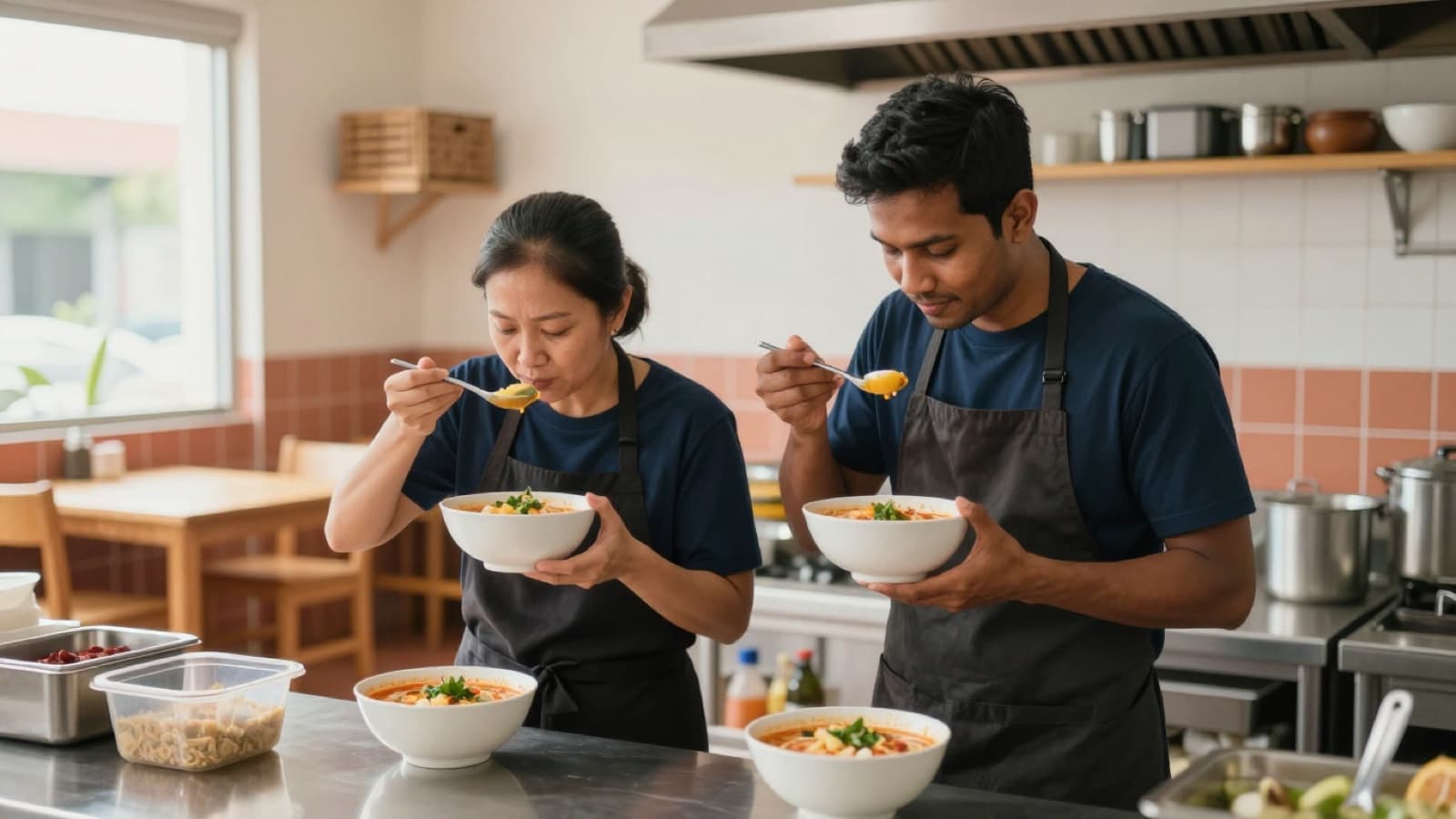
Your first outlet works because you are in it. You know which supplier shorts you on Fridays, how much rice to cook before the lunch crowd, and which cashier needs a second look at the closing count. None of that is written down. It lives in your head and in a few long-serving staff.
The second outlet is where that stops working. You cannot stand in both kitchens. The new team does not know the habits, the old team starts to drift when you are away, and the first month's numbers from the new place are hard to compare with anything. Many owners find the second outlet harder than the first, not because the location is wrong, but because the business was never set up to run without them.
This guide is about that operating side. Lease, renovation and licensing are projects of their own; check the current requirements on the official agency websites before you sign anything. What follows is what to put in place so that two outlets behave like one business.
Step 1: write down how outlet one actually runs
Before the new outlet opens, spend a few weeks turning habits into documents. Not a thick manual nobody reads, but short, specific pages your new team can follow on day one.
- Opening and closing checklists. What gets switched on, checked, prepped and counted, in what order. Include the cash count and who signs it.
- Recipe cards for every dish. Ingredients by weight, not "a bit of", plus the plating and the portion. A photo of the finished dish helps more than a paragraph.
- Prep lists by day of week. How much of each base, sauce and protein is prepped before service, and how it changes on weekends.
- Supplier list and ordering days. Who you buy from, what you buy, when you order and when it arrives.
- Who decides what. Which decisions the outlet supervisor can make alone (a refund, a comp, a menu item that has run out) and which ones come to you.
The test is simple: hand the documents to a capable cook who has never worked for you and see what they get wrong. Every question they ask is a gap.
Step 2: decide how the dishes stay the same
Customers who try you at the new outlet will compare it with the old one. The usual reason they taste different is not the chef; it is that each kitchen is quietly making its own version of the sauces and marinades.
You have three broad options:
- Each outlet cooks everything from scratch using the same recipe cards. Simplest to start, hardest to keep consistent.
- Outlet one prepares the key items for both. The first kitchen makes the sauces, pastes and marinated proteins and sends them over. This works while volumes are small, but it puts strain on a kitchen that also has to serve its own customers.
- A central kitchen prepares for every outlet. The most consistent option and the one most chains move to eventually, but it is a separate operation with its own staff, ordering and delivery.
There is no right answer for every chain. A common path is to start with the second option and plan the third once the outlet count grows. Whichever you pick, decide which items are "made centrally, never improvised" and which are "made fresh on site". Write that list down too.
If you go down the central kitchen route, our guide to how outlets order from a central kitchen covers cut-off times, par levels and receiving in detail.
Step 3: put a manager in charge, and limit what each person sees
At one outlet, everyone reports to you. At two, you need someone at each outlet who is responsible when you are not there, and that person needs clear limits.
For example, say you promote your best supervisor to run the new outlet. They need to see their own outlet's sales, roster and deliveries every day. They probably should not see the other outlet's numbers in detail, staff pay, or head-office costs. Write down what the outlet manager owns (daily operations, the roster within a budget, customer complaints) and what stays with you (pricing, suppliers, hiring decisions above a certain level).
The same applies to the rest of the team. Cashiers need the till, not the reports. Kitchen staff need the prep list, not the sales. Getting this right early avoids awkward conversations later when you try to take access away.
Step 4: plan the people, not just the headcount
Staffing is usually the hardest part of the second outlet in Singapore. A few practical points:
- Move some experienced staff over. The new outlet needs people who already know how you work. Plan for the old outlet to run a little thinner for the first weeks.
- Build one roster across both outlets. Part-timers and relief staff often work at both. If each outlet keeps its own roster in a separate chat or spreadsheet, people get double-booked or nobody covers the gap.
- Track hours the same way at both outlets. Timesheets that are kept differently at each outlet are impossible to check at month end.
Our guide to restaurant staff scheduling in Singapore goes deeper into building rosters across outlets.
Step 5: set up the menu and the till for the new outlet
The new outlet usually starts with the same menu as the first. Over time it may change: a mall outlet may drop a slow dish, a neighbourhood outlet may add a set lunch, prices may differ slightly between locations.
Decide early how you will handle that:
- Start from a copy, not from scratch. Retyping a full menu by hand at a new till is where prices and modifiers go wrong.
- Let each outlet's menu change independently once it is open, but keep a record of what is different and why.
- Keep dish names identical across outlets where the dish is the same, so sales can be compared item by item.
Step 6: compare the two outlets properly
The point of a second outlet is to learn from having two. That only works if the numbers are recorded the same way at both.
For example, if the old outlet closes its day at 10 pm and the new one closes after midnight, a "day" means different things at each, and daily sales will not compare. Agree on the same closing routine, the same payment method names and the same categories before the new outlet opens.
Once both are running, look at a few things every week:
- Sales and order count per outlet, and the average ticket.
- Best-selling items per outlet. A dish that sells well at one and poorly at the other tells you something about the location or the execution.
- Payment mix. A sudden change at one outlet is worth asking about.
- Wastage and short deliveries, if stock moves between outlets or from a kitchen.
How MakanCloud handles a second outlet
MakanCloud is built for chains, so adding an outlet is part of the normal setup rather than a separate project. Here is what the system does today:
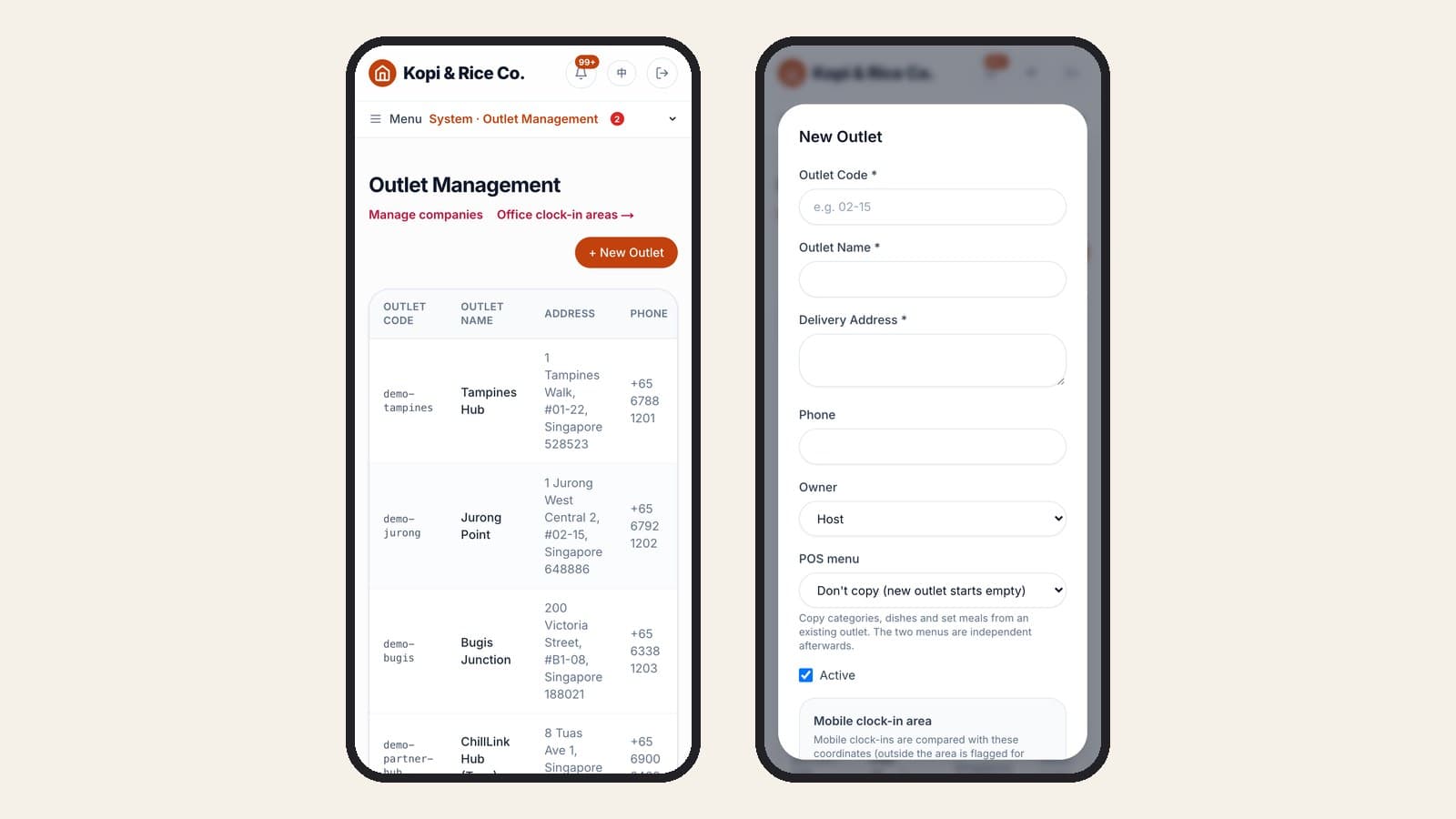
- New outlets are added from the admin side. An admin creates the outlet with its code, name and delivery address. On the same form, the POS menu can be copied from an existing outlet, including categories, dishes and set meals. After that the two menus are independent, so the new outlet can change prices or drop dishes without touching the first.
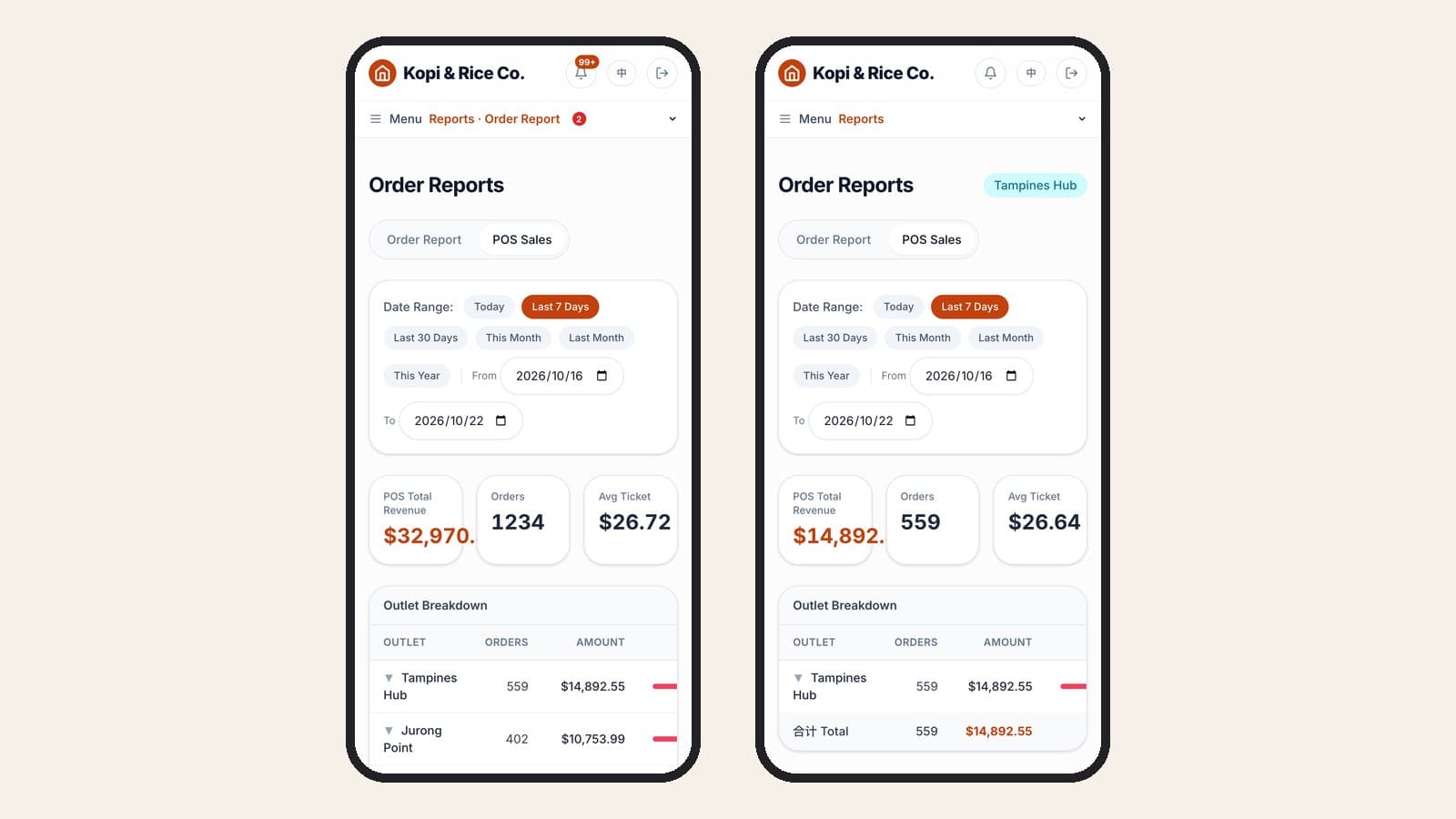
- Owners see every outlet; store managers see their own. The POS sales report shows total revenue, orders and average ticket, with an outlet breakdown, payment methods and top products. A store manager account is tied to one outlet and sees only that outlet's figures.
- Ordering from a kitchen is built in. If you prepare items centrally, outlets order from a product catalogue and the kitchen works from one consolidated picking list. Our Tin Lok Xian case study shows how that runs across 13 outlets plus 1 central kitchen.
- Rosters live in one place. Scheduling is included from the Pro plan, so the rosters for both outlets are built and checked in the same system.
On pricing, as listed on our pricing page as checked on 22 October 2026: the Starter plan at S$59 a month covers 1 outlet. A second outlet means moving to Pro at S$129 a month, which covers up to 5 outlets and adds scheduling. Our guide to POS pricing for multi-outlet restaurants explains how to compare costs across systems as you grow.
What the system will not do for you is write your recipe cards, choose your outlet manager or decide which items are made centrally. Those are the decisions in steps 1 to 4, and they matter more than any software.
FAQ
When is the right time to open a second outlet?
When the first outlet runs well for weeks at a time without you in the kitchen. If every problem still comes to you, a second outlet will double the problems, not the profit.
Should the second outlet have the same menu?
Start with the same core menu so customers get what they expect and you can compare sales dish by dish. Adjust later based on what actually sells at each location.
Do we need a central kitchen for two outlets?
Usually not on day one. Many chains start by having the first kitchen prepare key sauces and marinades for both, then set up a central kitchen as the outlet count grows. Decide early which items must be made centrally so the taste stays the same.
How do we keep track of two outlets without being in both?
Agree on the same closing routine and reports at both, give each outlet manager clear responsibilities, and review the same few numbers every week. A system that shows both outlets side by side makes that review take minutes instead of an evening.
See it on the demo
You can try the multi-outlet setup yourself in the MakanCloud demo: switch to the Admin role to see the outlet list and the chain-wide reports, then to the Store Manager role to see the same report limited to one outlet.
Plans and what each includes are on the pricing page. If you are planning a second outlet and want to talk through the setup, message us on WhatsApp at +65 9782 6954.
Related articles
- How Outlets Order from a Central Kitchen: Cut-off Times, Par Levels and ReceivingA practical guide for Singapore restaurant chains: how to set an ordering cut-off that works backwards from production, how to calculate par levels per outlet, how to receive against the order, and the month-end review that keeps it honest.
- Central Kitchen Software: What Actually Runs a Commissary (Singapore, 2026)Search "central kitchen Singapore" and you get factory units for rent. Here is what happens inside one — the seven daily checkpoints, which two get skipped, and when software starts to matter.
- Restaurant Staff Scheduling in Singapore: What to Check Before You Publish a RosterA practical guide to rostering restaurant staff in Singapore after the July 2026 Progressive Wage Model increase: the Employment Act and PWM rules a roster has to respect, a checklist to run before you publish, questions to ask when comparing scheduling software, and how MakanCloud generates and checks a monthly roster.
Curious how MakanCloud would fit your outlets?
14-day free trial, no credit card required — or book a 15-minute demo and we’ll walk through your setup directly.