Case Study: How Tin Lok Xian Runs 13 Outlets and a Central Kitchen, and Saves 5–6 Hours a Day on Ordering
By Alex · Founder, MakanCloud · 5 October 2026
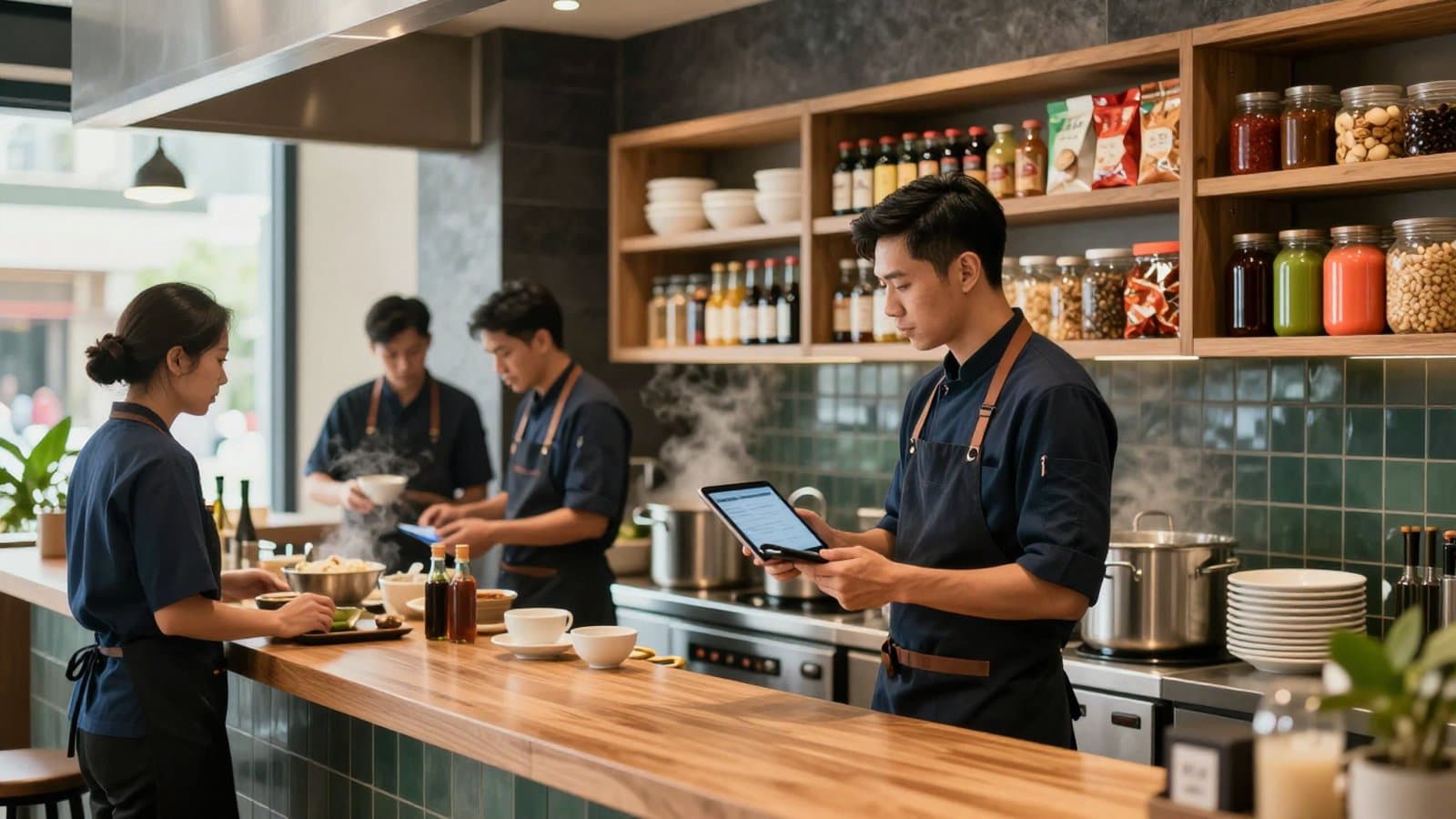
Tin Lok Xian (天乐鲜) is a Singapore Chinese restaurant group with 13 outlets, most of them in shopping malls, all supplied by a single central kitchen.
This is not a feature tour. It is the story of one specific job, daily ordering across a dozen-plus outlets, and what happened when it moved from people to software.
The results first
Tin Lok Xian moved outlet ordering and central-kitchen deliveries onto MakanCloud in May 2026. As of 5 October 2026, the system shows:
- 13 outlets plus 1 central kitchen, all ordering, picking and signing for deliveries in one system
- 2,400+ delivery orders, worth S$1.1M+ in goods
- About 15 outlet orders a day, averaging 17 line items each
- 230+ products managed by the central kitchen
- Outlets see the order value before they submit, so ordering costs stay within the company's gross-margin rule
- Month-end data shows what sells and what doesn't, so the slowest movers can be dropped
Tin Lok Xian's operations lead puts it simply: the ordering system alone saves at least 5–6 hours a day.
Here is where those hours come from, and what the group gained beyond the time.
Before: orders collected by hand, then fixed by hand
When a dozen outlets share one kitchen, the hard part is not the cooking. It is knowing what every outlet needs.
The old process looked like this. Each outlet's head chef sent in an order. Someone at head office collected them one by one and added them up into what the central kitchen had to prepare. When an outlet changed a quantity or added an item, the totals were corrected by hand. With 17 items per order and more than a dozen outlets ordering every day, the consolidation alone was close to a full-time job.
The knock-on problems were worse:
- Nobody knew exactly what stock was left. Inventory came from counts and estimates. Running low usually meant the kitchen found out when something ran out.
- What to buy, and what it cost, was only clear after the fact. If orders are consolidated by hand, costs are too.
- Month-end reporting meant going back through a month of paperwork.
None of this is anyone's fault. Past a few outlets, collecting and correcting orders by hand simply stops scaling, and the first things to slip under pressure are recording and checking. We described the same pattern in our guide to what central kitchen software actually does: spreadsheets start leaking at around three outlets. Tin Lok Xian has thirteen.
After: outlets order, the system consolidates
On MakanCloud, the ordering line now runs like this:
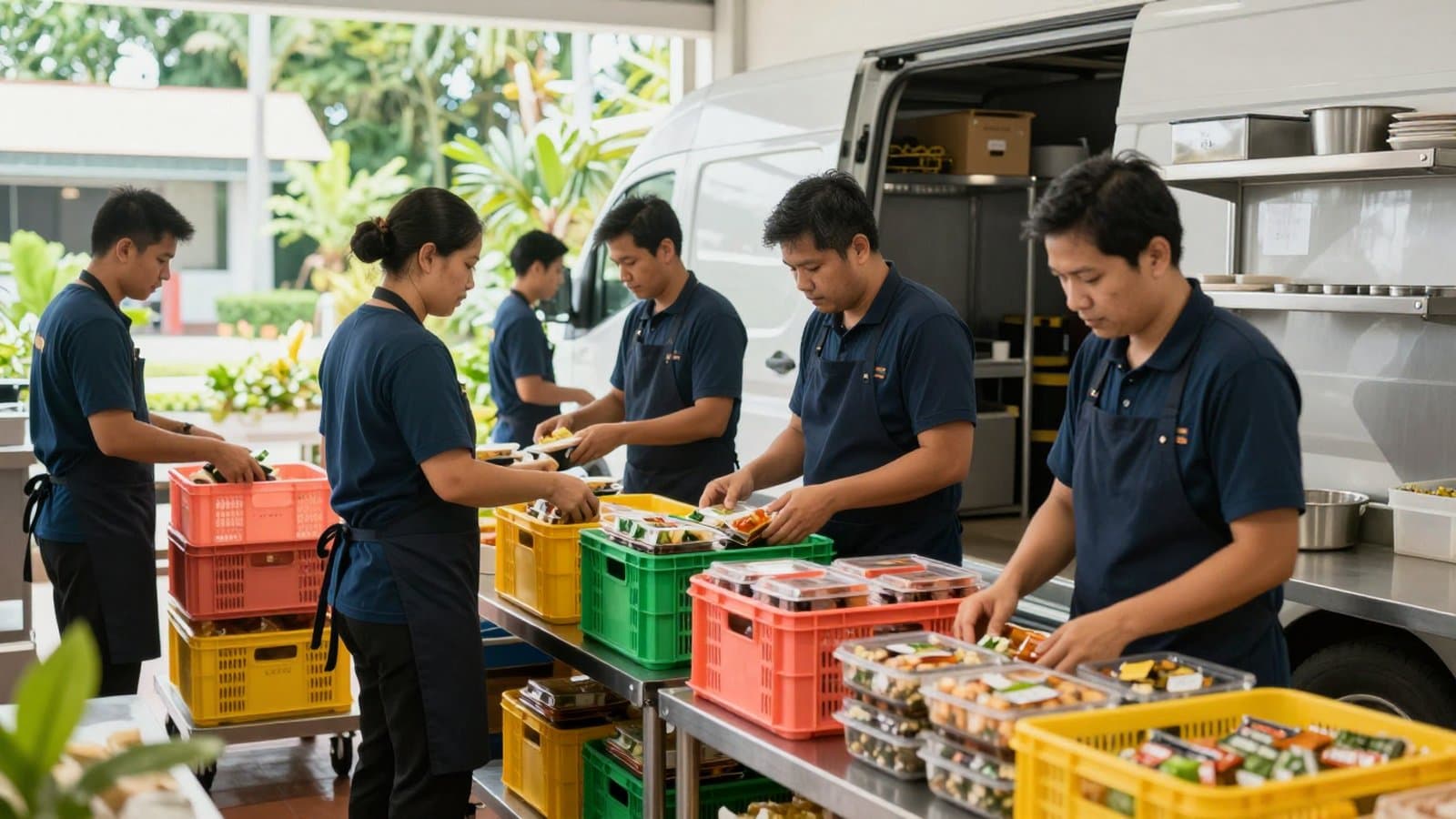
- 1. The outlet's head chef places the order directly in the system: items, quantities, delivery date.
- 2. The central kitchen sees every outlet's order in real time, and the system totals them by item into the day's production and picking list. Nobody copies numbers across.
- 3. If an outlet amends its order, the totals update with it.
- 4. The system generates a picking slip per outlet; the kitchen picks, dispatches and delivers.
- 5. The outlet signs for the delivery, and the order is closed in the system.
Over five months, almost all of Tin Lok Xian's 2,600-plus orders have reached "delivered". Cancelled orders keep their record too, so you can see which outlet cancelled and when.
It is not only about the hours
The operations lead named several changes that are more concrete than "saving time":
Reporting is easy. Numbers that used to require consolidation are simply there. What each outlet ordered, and how much, by day, by outlet or by item.
Remaining stock is visible at any time. Stock moves with orders and dispatches, so it is clear what needs topping up and what is overstocked, without waiting for the kitchen to shout.
Costs stay under control. When an outlet places an order, the unit price of every item, each line total and the value of the whole order are on screen before it is submitted. Tin Lok Xian has its own gross-margin rule, and with the order value in front of them, outlets can keep each order within that rule as they place it, rather than discovering an overspend at month-end reconciliation. Head office, in turn, knows what needs to be bought and what it costs.
Month-end data shows what sells. At the end of each month, the team pulls every product's order volume and value across the outlets. Lined up side by side, it is obvious which products sell well and which barely move: what outlets order most is what customers buy most. Tin Lok Xian uses this to drop its slowest movers, keeping the menu and stock lean, and the central kitchen stops prepping for items that do not sell.
The monthly report has its data ready. The month's figures are already in the system, so the report starts from real data, not a pile of paperwork. In the operations lead's words, it is "really convenient".
From manual collection and manual correction to automatic tallying: that is the core of it. The hours saved are the result. The real change is that record-keeping is no longer extra work; it is a by-product of placing the order.
Why one system can run thirteen outlets
Tin Lok Xian's setup is typical of Chinese restaurant groups in Singapore:
- Several brands, one kitchen. The group runs several Chinese food brands with completely different menus, but their ingredients and prep come from the same central kitchen. Each outlet orders from its own menu; the kitchen sees combined demand across all brands.
- A Chinese-speaking back of house. Head chefs and kitchen staff work in Chinese, so the interface and documents are available in Chinese, and picking slips print bilingually, so drivers and front-of-house can read them in English.
- Outlets spread across malls. Mall delivery windows are tight. Picking and dispatching per outlet cuts wrong and missed deliveries.
None of this is flashy. These are the steps a dozen outlets use every day, where a mistake is noticed immediately.
Is this case relevant to you?
Tin Lok Xian's approach is worth a look if two or more of these apply to you:
- You run more than three outlets, or are about to open your third
- You have a central kitchen, or one outlet preps for the others
- Outlet orders are still collected over WhatsApp, phone calls or a shared spreadsheet
- Month-end reconciliation and reporting take you several days
Equally, if you have one or two outlets and no central kitchen, pen, paper and a spreadsheet probably still work, and there is no rush to buy software.
FAQ
Which MakanCloud modules does Tin Lok Xian use?
This case covers the outlet ordering, central kitchen and delivery line, which is where Tin Lok Xian uses MakanCloud most deeply and where the data is most complete. Other modules, including point of sale at the outlets, are being rolled out, and we will update these figures as they go live.
How long did it take to get up and running?
Tin Lok Xian placed its first orders in the system in early May 2026, ran more than 440 orders through it that month, and has stayed at roughly 450–500 orders a month since.
How is "5–6 hours a day" calculated?
It is the operations lead's estimate of the order-consolidation work before and after: collecting, totalling and correcting outlet orders by hand, which the system now does automatically. Your savings will depend on how many outlets you run and how often they order.
Does the system block orders that break the gross-margin rule?
No. What the system does is make the order value visible at the moment of ordering: unit prices, line totals and the order total are calculated before submission. The margin rule, and how much each outlet should order, is Tin Lok Xian's own management policy; the system lets outlets check against it while ordering instead of after reconciliation.
How do they see which products sell at month end?
The back-office order report breaks down each product's total order quantity and value by month, and there is a best-sellers ranking as well. Tin Lok Xian currently reads this from outlet orders to the central kitchen: high order volume means a product sells well, and products that sit at the bottom month after month become candidates to drop.
What does it cost?
MakanCloud's pricing is public, in four tiers: Starter S$59/month, Pro S$129/month, Growth S$199/month and Enterprise S$299/month, depending on outlet count and modules. You can work out a budget on the pricing page. For how software costs change as you add outlets, see our guide to multi-outlet POS pricing in Singapore.
See whether your outlets could run this way
The same ordering line, from outlet order to central-kitchen consolidation, picking slip and sign-off, can be walked through end to end in the MakanCloud demo. No call needed: leave your email and go straight into the demo.
If your situation looks like Tin Lok Xian's, with several outlets, a central kitchen and orders still consolidated by hand, we are also happy to talk through where your process gets stuck.
Related articles
- Singapore Restaurant POS Pricing Compared: The Real Cost of Growing from One Outlet to FiveCompare MakanCloud, Qashier, StoreHub, Eats365, RestoSuite and iCHEF on public pricing, features and fit for single outlets, growing chains and central kitchens.
- How to Open a Second Restaurant Outlet in Singapore: The Operating SideA practical checklist for Singapore F&B owners opening a second outlet: what to write down before you leave the first one, how to keep dishes the same, who runs which outlet, how stock moves between them, and how to read two outlets' numbers side by side.
- How Outlets Order from a Central Kitchen: Cut-off Times, Par Levels and ReceivingA practical guide for Singapore restaurant chains: how to set an ordering cut-off that works backwards from production, how to calculate par levels per outlet, how to receive against the order, and the month-end review that keeps it honest.
Curious how MakanCloud would fit your outlets?
14-day free trial, no credit card required — or book a 15-minute demo and we’ll walk through your setup directly.